

What is recurring billing software?
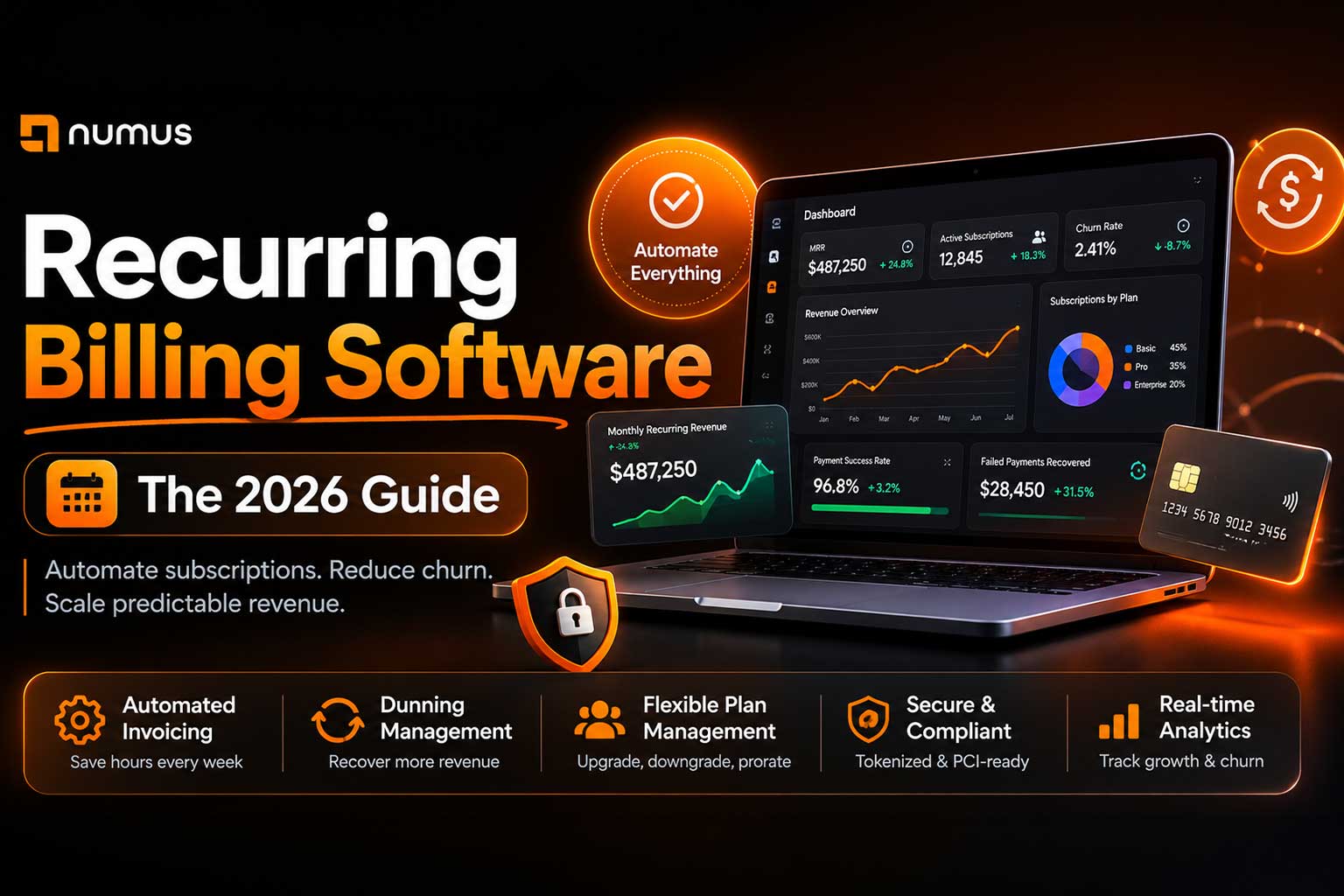
Recurring billing software is a specialized platform that automates the process of charging customers on a scheduled basis (monthly, annually, etc.). It manages subscription plans, handles prorations and upgrades, securely stores tokenized payment data, and automatically retries failed payments (dunning) to reduce involuntary churn.
The subscription economy is booming. From SaaS platforms and streaming services to monthly supplement boxes and high-ticket coaching retainers, recurring revenue is the holy grail of modern business. It provides predictable cash flow and significantly increases Customer Lifetime Value (LTV).
However, managing subscriptions manually is impossible at scale. You need dedicated recurring billing software. This guide explains how these platforms work, the critical features you need to look for, and how to choose the right software for your specific business model-especially if you operate in a high-risk industry.
Table of Contents
- What is recurring billing software?
- Why You Need Dedicated Recurring Billing Software
- Core Features to Evaluate
- The High-Risk Subscription Challenge
- Frequently Asked Questions (FAQ)
Why You Need Dedicated Recurring Billing Software
If you only have ten customers paying you $100 a month, you might be able to manage it with calendar reminders and manual invoices. But what happens when you have 1,000 customers?
What happens when a customer wants to upgrade their plan in the middle of the month? What happens when their credit card expires? What happens when a transaction is declined due to insufficient funds?
Recurring billing software automates all of this complexity.
- Automated Invoicing and Charging: The software automatically generates invoices and charges the vaulted credit card on the exact renewal date.
- Plan Management: It handles the complex math of prorations when a customer upgrades, downgrades, or pauses their subscription mid-cycle.
- Dunning Management: This is arguably the most valuable feature. “Dunning” is the process of recovering failed payments. Good software will automatically retry declined cards at optimal times and send automated emails prompting the customer to update their payment info.
- Analytics and Metrics: It provides real-time dashboards tracking critical SaaS metrics like Monthly Recurring Revenue (MRR), Churn Rate, and Customer Acquisition Cost (CAC).
Core Features to Evaluate
When comparing recurring billing platforms (like Chargebee, Recurly, Stripe Billing, or specialized high-risk platforms), evaluate them against these core capabilities:
1. Flexible Billing Models
Your software must support your specific pricing strategy. Look for support for:
- Flat-Rate Subscriptions: $50/month.
- Tiered Pricing: Basic ($10), Pro ($25), Enterprise ($100).
- Usage-Based (Metered) Billing: Charging based on consumption (e.g., $0.01 per API call or $5 per gigabyte of storage).
- Hybrid Models: A flat base fee plus usage-based overages.
2. Robust Dunning and Churn Prevention
Involuntary churn (when a customer cancels unintentionally because their card failed) can destroy a subscription business.
- Look for software with Account Updater features, which automatically ping the card networks to get new expiration dates and card numbers when a customer’s card is reissued.
- Ensure the dunning logic is customizable (e.g., retry on day 1, day 3, and day 7, while sending specific email sequences).
3. Payment Gateway Agnosticism
This is crucial, especially for high-risk merchants. Some billing software (like Stripe Billing) forces you to use their underlying payment processor.
- The Risk: If Stripe decides your business model is too risky and shuts down your processing, your entire billing infrastructure goes down with it.
- The Solution: Choose a gateway-agnostic billing platform (like Chargebee or Recurly) that allows you to plug in any payment gateway. If your processor drops you, you simply plug a new high-risk gateway into your billing software, and your subscriptions continue uninterrupted.
4. Customer Self-Service Portals
You do not want your customer support team spending hours manually updating credit card numbers or canceling subscriptions. The software should provide a secure, white-labeled portal where customers can log in, view their invoices, update their payment methods, and manage their plans themselves.
The High-Risk Subscription Challenge
Running a subscription business in a high-risk industry (like CBD subscriptions, adult content, or high-ticket coaching retainers) presents unique challenges.
- Processor Scrutiny: Processors hate high-risk subscriptions because they carry a massive risk of “friendly fraud” chargebacks (customers forgetting they subscribed and disputing the recurring charge).
- Software Restrictions: Mainstream billing platforms often use mainstream processors under the hood, meaning they will reject your high-risk business.
The Solution for High-Risk Subscriptions:
You must decouple your billing software from your payment processor.
- Secure a dedicated high-risk merchant account and a high-risk payment gateway (like NMI).
- Choose a gateway-agnostic recurring billing platform.
- Connect the billing platform to your high-risk gateway via API.
This setup ensures you have the robust subscription management tools you need without violating the acceptable use policies of mainstream processors [1].
Frequently Asked Questions (FAQ)
What is the difference between a payment gateway and recurring billing software?
A payment gateway is the engine that actually processes the credit card transaction. Recurring billing software is the logic layer sitting on top of the gateway; it tells the gateway when to charge the card and for how much, based on the customer’s subscription plan.
How much does recurring billing software cost?
Pricing varies wildly. Some platforms charge a flat monthly fee (e.g., $299/month), while others charge a percentage of your revenue (e.g., 0.5% to 1.0% of your MRR). Many offer a hybrid model (a base fee plus a percentage once you cross a certain revenue threshold).
What is dunning?
Dunning is the automated process of communicating with customers to collect payment for declined or failed transactions. It involves automated retries of the credit card and automated email sequences prompting the customer to update their billing information.