

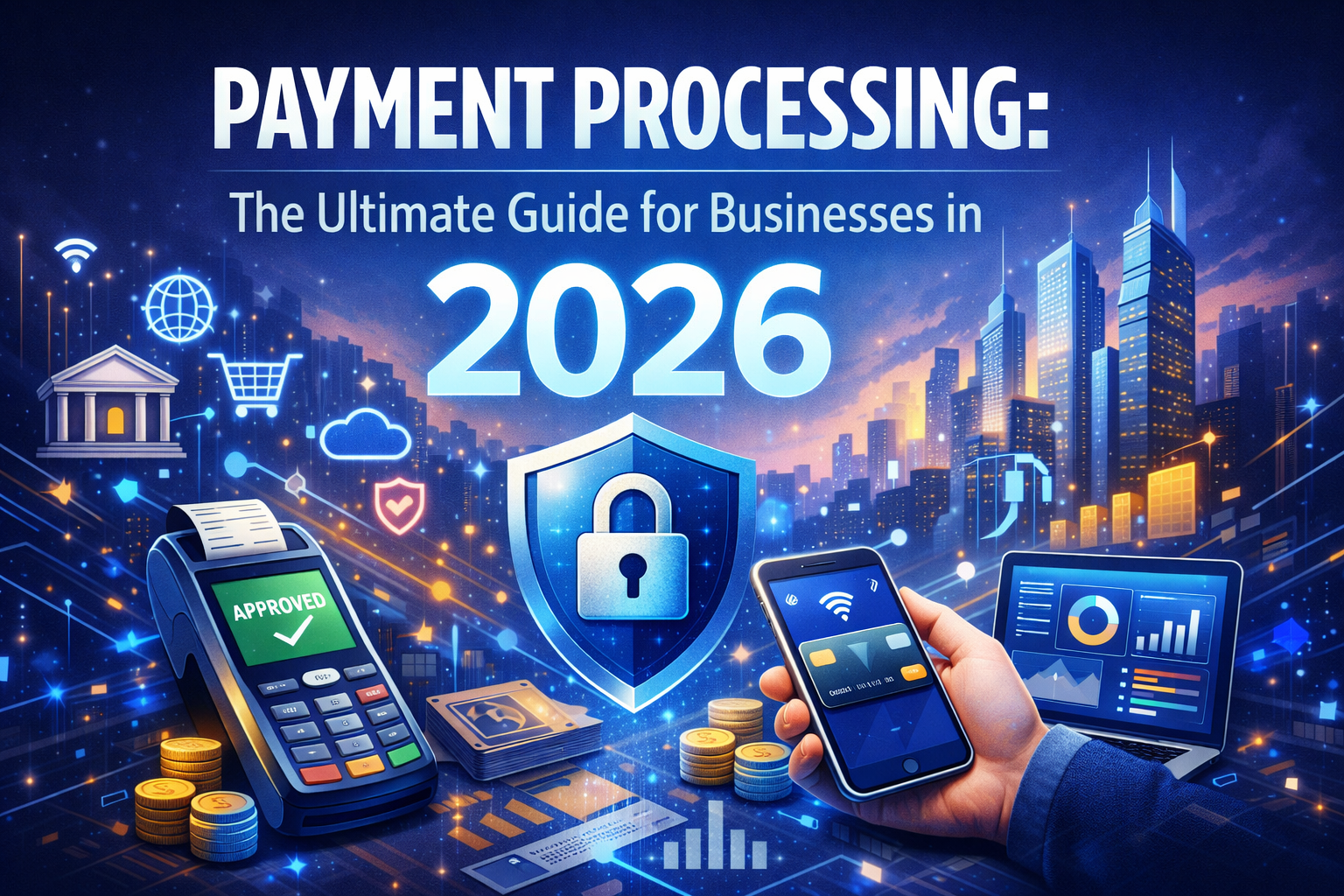
Payment Processing: The Ultimate Guide for Businesses in 2026
Payment processing is the technology that allows businesses to accept electronic payments from customers using credit cards, debit cards, digital wallets, bank transfers, and other modern payment methods. Without payment processing infrastructure, businesses would be limited to cash-only transactions, severely restricting their ability to grow.
Today, payment processing powers nearly every modern business, from e-commerce stores and SaaS platforms to restaurants, retail stores, subscription services, and global enterprises. In fact, the global digital payments industry processes trillions of dollars annually, making payment processing one of the most critical systems in the global economy.
This comprehensive guide will explain everything you need to know about payment processing, including:
- What payment processing is
- How payment processing works
- The major players in the payment ecosystem
- Payment processing fees explained
- Types of payment processing solutions
- Security and fraud prevention
- How to choose the best payment processing provider
- Future trends shaping payment processing
If you want to understand payment processing at a deeper level, and choose the right payment solution for your business, this guide will give you everything you need.
What Is Payment Processing?
Payment processing refers to the system that facilitates the transfer of funds from a customer’s payment method to a business’s bank account during a purchase.
Whenever a customer makes a payment using a card or digital wallet, a complex payment processing infrastructure securely moves the payment data through multiple networks and financial institutions to authorize and complete the transaction.
At its core, payment processing involves:
- Collecting payment information
- Authorizing the transaction
- Transferring funds between banks
- Depositing the money into the merchant’s account
While the process happens in seconds, it relies on advanced payment technology, banking systems, and security protocols working together.
Businesses rely on payment processing to accept a wide variety of payment methods, including:
- Credit cards
- Debit cards
- Digital wallets (Apple Pay, Google Pay)
- ACH bank transfers
- Buy Now Pay Later (BNPL)
- Contactless payments
- Cryptocurrency payments
The ability to accept multiple payment types increases customer convenience and significantly improves conversion rates.
How Payment Processing Works
Although payment processing appears simple to customers, several steps occur behind the scenes during every transaction.
Understanding this process can help businesses optimize their payment systems and reduce failed transactions.
Step 1: Customer Initiates Payment
The payment process begins when a customer enters their payment details or uses a card to pay.
This can occur through:
- an online checkout page
- a mobile app
- a point-of-sale (POS) terminal
- a virtual terminal
The payment details are then securely captured by the merchant’s payment system.
Step 2: Payment Gateway Encrypts the Data
A payment gateway encrypts the payment information before transmitting it to the payment processor.
The gateway acts as the secure connection between the merchant’s checkout system and the payment processor.
Payment gateways provide essential features such as:
- encryption
- tokenization
- fraud detection
- PCI compliance
This ensures customer payment data remains secure throughout the transaction.
Step 3: Payment Processor Routes the Transaction
Once the payment gateway sends the encrypted data, the payment processor routes the transaction to the appropriate card network.
Major card networks include:
- Visa
- Mastercard
- American Express
- Discover
The card network then sends the transaction request to the customer’s issuing bank.
Step 4: Issuing Bank Approves or Declines the Transaction
The issuing bank evaluates several factors before approving the payment.
These include:
- available funds or credit limit
- potential fraud risk
- card validity
- account status
If the transaction passes these checks, the bank approves the payment and sends the authorization back through the payment network.
If there is an issue, the transaction may be declined.
Step 5: Authorization Confirmation
The authorization message travels back through the payment processing chain:
Issuing Bank → Card Network → Payment Processor → Payment Gateway → Merchant
At this point, the merchant receives confirmation that the transaction is approved.
However, the funds have not yet been transferred.
Step 6: Settlement and Funding
At the end of the business day, approved transactions are grouped into batches for settlement.
During settlement:
- The issuing bank transfers funds to the acquiring bank.
- The acquiring bank deposits the funds into the merchant’s account.
Most payment processors deposit funds within 1-3 business days, although some offer same-day funding.
Key Components of the Payment Processing Ecosystem
Several organizations and technologies are involved in payment processing transactions.
Understanding these roles can help businesses choose the right payment partners.
Merchant
The business accepting payments from customers.
Merchants can include:
- e-commerce stores
- SaaS companies
- retail businesses
- service providers
Customer (Cardholder)
The individual making the payment using a card or digital payment method.
Payment Processor
A payment processor manages the communication between banks, card networks, and merchants.
Payment processors handle:
- transaction routing
- authorization requests
- settlement processing
- fraud monitoring
Payment Gateway
The payment gateway securely captures payment information and transmits it to the processor.
Payment gateways are essential for online payment processing.
Issuing Bank
The issuing bank provides the customer’s credit or debit card.
It approves or declines transactions based on the cardholder’s account.
Acquiring Bank
The acquiring bank works with the merchant to receive funds from processed transactions.
It deposits payments into the merchant’s bank account.
Types of Payment Processing
Different businesses require different payment processing solutions depending on how they sell products or services.
Online Payment Processing
Online payment processing allows businesses to accept payments through websites and mobile apps.
This type of payment processing requires:
- a payment gateway
- a merchant account
- fraud protection tools
Online payment processing is essential for:
- e-commerce stores
- digital product sellers
- subscription services
- SaaS platforms
In-Person Payment Processing
In-person payment processing occurs when customers pay at a physical location using a POS terminal or card reader.
Retail stores, restaurants, and service businesses rely heavily on in-person payment processing systems.
Mobile Payment Processing
Mobile payment processing enables businesses to accept payments using smartphones or tablets.
Examples include:
- mobile POS systems
- tap-to-pay devices
- QR code payments
This model is popular among mobile service providers and small businesses.
Subscription Payment Processing
Subscription payment processing supports recurring billing for businesses that charge customers on a monthly or annual basis.
Examples include:
- SaaS companies
- membership platforms
- subscription boxes
- streaming services
Payment Processing Fees Explained
Every payment transaction includes several types of fees shared across different participants in the payment ecosystem.
Understanding these fees helps businesses manage costs effectively.
Interchange Fees
Interchange fees are paid to the issuing bank for processing the transaction.
These fees vary depending on:
- card type
- transaction method
- industry category
Interchange fees typically represent the largest portion of payment processing costs.
Assessment Fees
Assessment fees are charged by card networks such as Visa and Mastercard.
These fees support the card network infrastructure that enables payment transactions.
Processor Markup
Payment processors add their own markup to cover operational costs and generate revenue.
The total cost paid by merchants typically combines interchange, assessment, and processor fees.
Common Payment Processing Pricing Models
Payment processors use several pricing models.
Flat-Rate Pricing
Flat-rate pricing charges a fixed percentage per transaction.
Example:
2.9% + $0.30 per transaction
This pricing model is common among simple payment platforms.
Interchange-Plus Pricing
Interchange-plus pricing separates interchange fees from processor markup.
Example:
Interchange + 0.30%
This model is considered more transparent and often preferred by larger businesses.
Tiered Pricing
Tiered pricing groups transactions into categories with different processing rates.
These tiers may include:
- qualified
- mid-qualified
- non-qualified
While common, tiered pricing can sometimes make costs harder to predict.
Payment Security and Fraud Prevention
Security is a critical aspect of payment processing because financial transactions involve sensitive customer information.
Modern payment processors implement multiple layers of protection.
PCI DSS Compliance
PCI DSS is a global security standard that protects cardholder data.
Merchants accepting credit cards must follow PCI compliance requirements.
Tokenization
Tokenization replaces card numbers with secure tokens that cannot be used outside the transaction.
This dramatically reduces the risk of data breaches.
Encryption
Encryption ensures that payment data remains unreadable during transmission.
Fraud Detection Systems
Advanced payment processing systems use artificial intelligence to detect suspicious transactions and prevent fraud.
Benefits of Modern Payment Processing
Implementing a modern payment processing solution provides numerous advantages for businesses.
Faster Payments
Businesses receive funds quickly, improving cash flow.
Increased Sales
Accepting multiple payment methods reduces checkout friction and increases conversions.
Global Commerce
Payment processing allows businesses to sell internationally.
Improved Customer Experience
Customers expect fast, secure, and convenient payment options.
How to Choose the Best Payment Processing Provider
Choosing the right payment processing partner is crucial for business success.
Consider these factors when evaluating payment processors.
Approval Speed
Some payment processors approve merchant accounts within 24-48 hours, while others take weeks.
Industry Compatibility
Certain industries require specialized payment processing due to higher risk levels.
Integration Capabilities
Your payment processor should integrate with your:
- website
- CRM
- shopping cart
- accounting software
Transparent Pricing
Look for providers that clearly explain their pricing structure.
Customer Support
Reliable support ensures payment issues can be resolved quickly.
The Future of Payment Processing
Payment processing technology continues to evolve rapidly.
Several innovations are shaping the future of digital payments.
AI-Powered Fraud Detection
Artificial intelligence is improving fraud detection and reducing chargebacks.
Embedded Payments
More software platforms are integrating payment processing directly into their products.
Cryptocurrency Payments
Some businesses now accept cryptocurrency payments alongside traditional methods.
Real-Time Payments
Real-time payment networks are enabling instant fund transfers between banks.
Final Thoughts
Payment processing is one of the most important systems supporting modern commerce.
From the moment a customer taps their card or clicks “buy,” payment processing technology works behind the scenes to securely authorize, route, and settle the transaction.
Businesses that understand payment processing, and choose the right payment partners, can benefit from:
- faster payments
- lower fees
- better security
- higher conversion rates
As digital commerce continues to grow, payment processing will remain a critical component of every successful business.
Related Articles
What payment processing options are best for small businesses?