


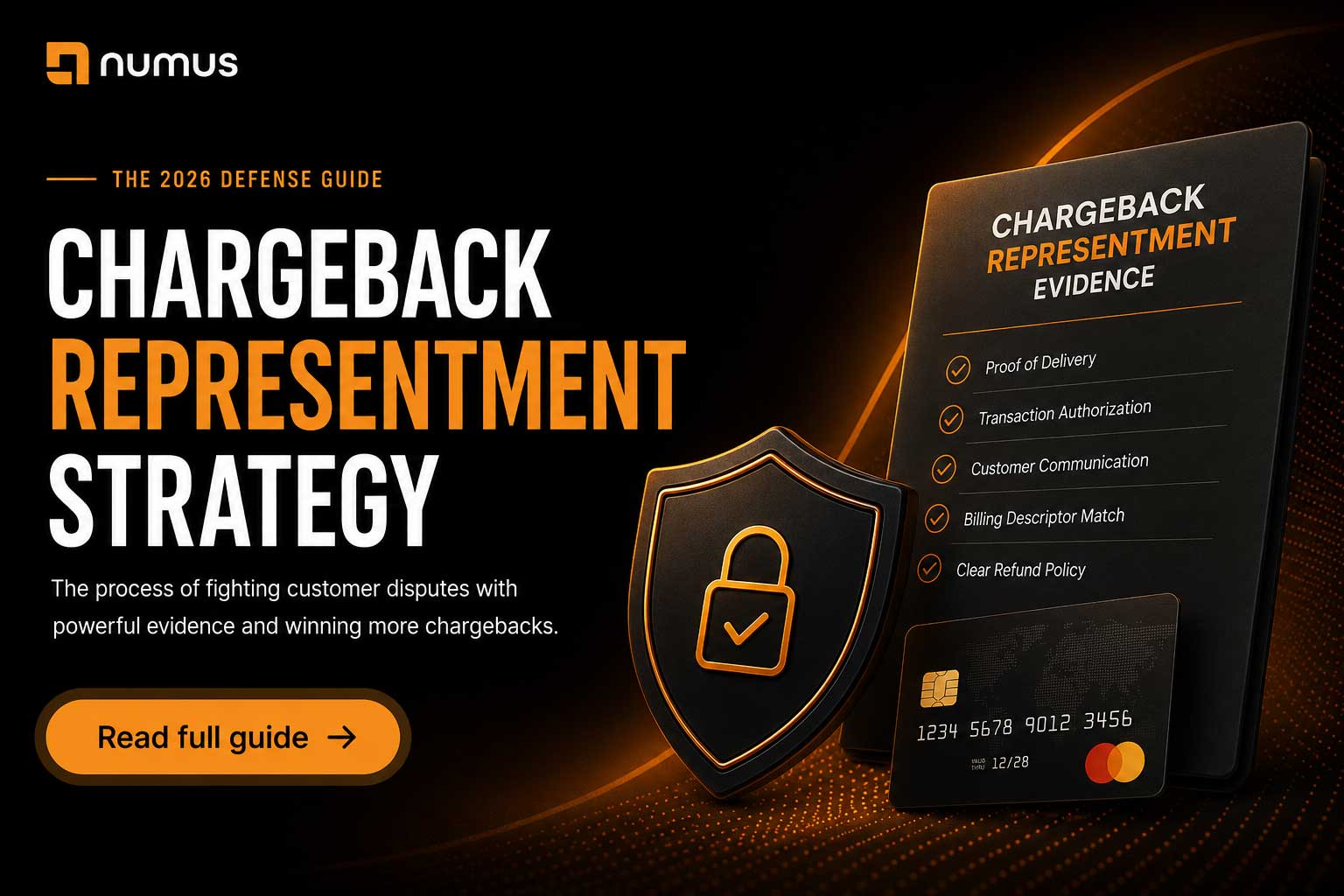
What is chargeback representment?
Chargeback representment is the process of fighting a customer dispute by submitting evidence to the card network (Visa or Mastercard) proving that the transaction was legitimate and the customer authorized it. When a customer files a chargeback, the merchant has a limited time window (typically 7 to 10 days) to submit evidence. If the evidence is compelling, the card network may rule in the merchant’s favor, and the merchant keeps the funds. If the evidence is weak, the merchant loses the chargeback and must refund the customer.
Most merchants give up on chargebacks without even trying to fight them. However, with proper documentation and evidence, merchants can win 40% to 60% of chargebacks.
This guide explains the representment process, the types of evidence that win chargebacks, and the strategies to maximize your win rate.
Table of Contents
- What is chargeback representment?
- Understanding the Chargeback Lifecycle
- The Types of Evidence That Win Chargebacks
- The Representment Process: Step-by-Step
- Common Representment Mistakes
- Frequently Asked Questions (FAQ)
1. Understanding the Chargeback Lifecycle
To effectively fight chargebacks, you must understand the timeline.
Day 0: Transaction Occurs
Customer makes a purchase and receives the product/service.
Days 1 to 120: Customer Initiates Chargeback
Customer contacts their bank claiming they never authorized the transaction or that it was fraudulent. The bank initiates a chargeback.
Day 0 (Chargeback Timeline): Merchant Receives Chargeback Notice
You receive a notification that a chargeback has been filed. You now have 7 to 10 days to respond.
Days 1 to 7: Representment Window
You have 7 to 10 days to submit evidence to the card network. This is your only opportunity to fight the chargeback.
Days 8 to 30: Card Network Reviews Evidence
The card network reviews your evidence and the customer’s evidence. They make a decision.
Day 31: Final Decision
The card network announces whether the chargeback is upheld (customer wins) or reversed (merchant wins).
2. The Types of Evidence That Win Chargebacks
Not all evidence is equally persuasive. Here are the types of evidence that card networks consider most compelling.
Evidence Type 1: Proof of Delivery
For physical goods, proof of delivery is the strongest evidence. This includes:
- Tracking number showing delivery to the customer’s address.
- Signature confirmation.
- Delivery confirmation from the carrier.
Evidence Type 2: Transaction Authorization
Evidence that the customer authorized the transaction, including:
- IP address logs showing the transaction came from the customer’s home IP.
- Device fingerprinting showing the transaction came from the customer’s device.
- Email confirmation sent to the customer’s email address.
Evidence Type 3: Customer Communication
Evidence of communication with the customer, including:
- Emails from the customer asking questions about the product.
- Refund requests from the customer (showing they knew about the transaction).
- Customer service chat logs.
Evidence Type 4: Billing Descriptor Match
Evidence that the billing descriptor matched what the customer expected:
- Screenshots showing the billing descriptor at checkout.
- Email confirmations showing the billing descriptor.
Evidence Type 5: Clear Refund Policy
Evidence that your refund policy was clearly displayed:
- Screenshots of your website showing the refund policy.
- Email confirmations including the refund policy.
3. The Representment Process: Step-by-Step
When you receive a chargeback notice, here is how to respond.
Step 1: Gather Evidence Immediately
Do not wait. Immediately gather all evidence related to the transaction:
- Order confirmation.
- Delivery confirmation.
- Customer communication.
- Billing descriptor information.
Step 2: Analyze the Chargeback Reason Code
The chargeback notice will include a reason code (e.g., “Unauthorized Transaction” or “Product Not Received”). Tailor your evidence to address this specific reason code.
Step 3: Prepare Your Representment Package
Organize your evidence into a clear, compelling narrative:
- Start with a summary explaining why the chargeback is invalid.
- Present evidence in chronological order.
- Highlight the most compelling evidence.
- Address the customer’s specific claims.
Step 4: Submit Your Representment
Submit your representment package to your payment processor before the deadline. Do not miss the deadline—if you do, you automatically lose the chargeback.
Step 5: Wait for a Decision
The card network will review your evidence and make a decision. This typically takes 2 to 4 weeks.
4. Common Representment Mistakes
· Missing the Deadline: The most common mistake. If you do not submit representment before the deadline, you lose automatically.
· Weak Evidence: Submitting evidence that does not directly address the customer’s claim.
· Poor Organization: Submitting evidence in a disorganized manner that is hard for the card network to review.
· Emotional Arguments: Making emotional arguments instead of presenting factual evidence.
· Ignoring the Reason Code: Not tailoring your evidence to address the specific reason code.
5. Frequently Asked Questions (FAQ)
What is the win rate for chargeback representment? For merchants with good documentation, the win rate is typically 40% to 60%. For merchants with poor documentation, the win rate is close to 0%.
Should I always fight every chargeback? No. For chargebacks under $50, the cost of fighting (time, effort, processing fees) may exceed the value. For chargebacks over $200, it is usually worth fighting.
Can I appeal a chargeback loss? Yes, but appeals are rarely successful. You typically get only one chance to fight a chargeback.