
What is merchant account underwriting?
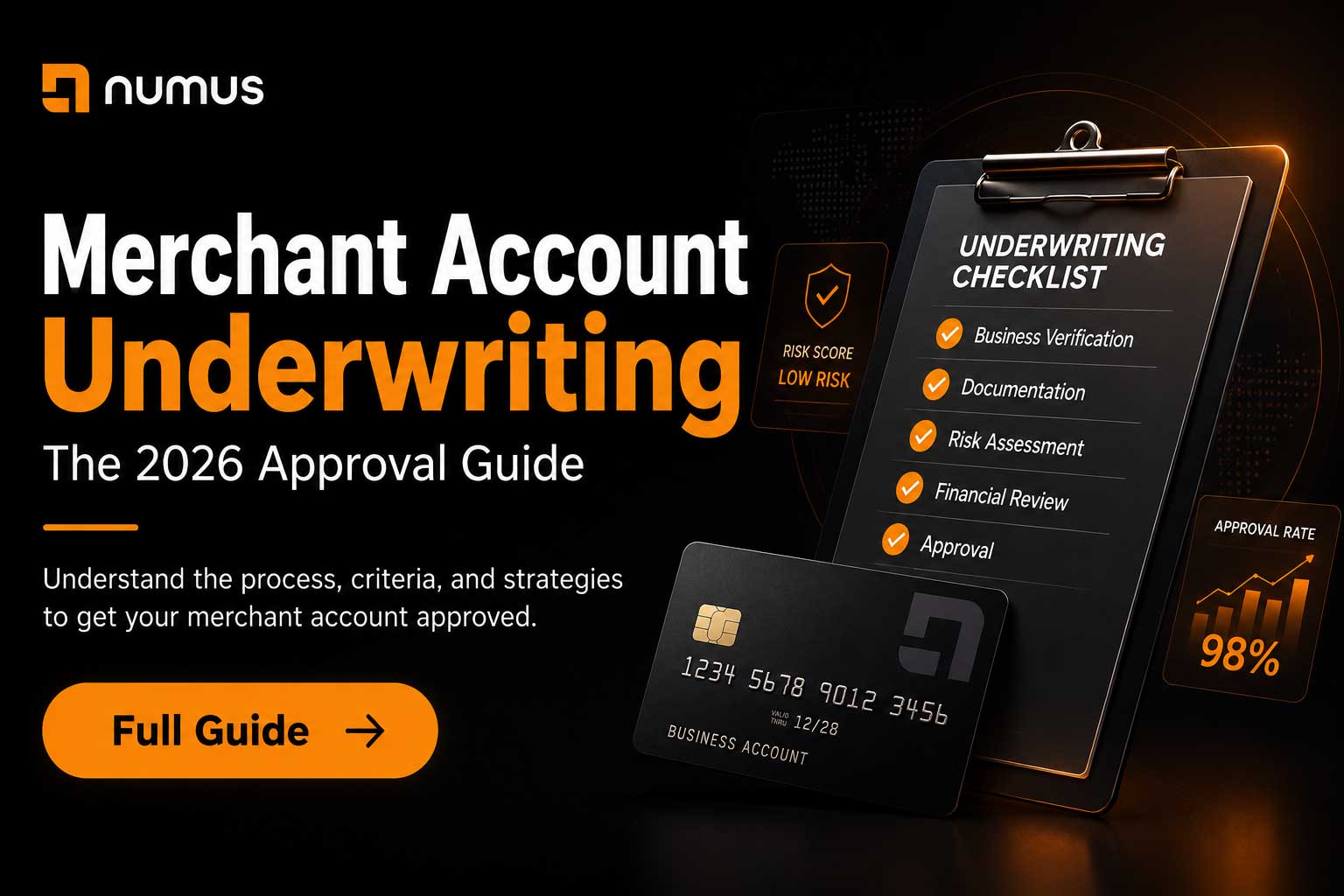
Merchant account underwriting is the process by which an acquiring bank evaluates your business to determine whether to approve your merchant account application and at what rates and terms. The underwriting process involves reviewing your business documentation (business license, financial statements, website), assessing your risk profile (industry, chargeback history, processing volume), and verifying your identity and legitimacy. The underwriter’s job is to predict whether your business will generate chargebacks, fraud, or regulatory violations that could cost the bank money.
Most merchants have no idea what happens behind the scenes when they apply for a merchant account. Understanding the underwriting process can dramatically increase your approval odds and help you negotiate better terms.
This guide walks through the underwriting process, the criteria underwriters evaluate, and the strategies to get approved.
Table of Contents
- What is merchant account underwriting?
- The Merchant Account Underwriting Process
- The Key Underwriting Criteria
- Strategies to Improve Your Underwriting Odds
- Common Underwriting Rejections and How to Appeal
- Frequently Asked Questions (FAQ)
1. The Merchant Account Underwriting Process
Underwriting typically follows a standardized process, though the specific steps vary by processor.
Step 1: Application Submission
You submit your merchant account application through the processor’s website or with a sales representative. You provide basic information about your business, your expected processing volume, and your industry.
Step 2: Automated Screening
The processor’s system automatically screens your application against known fraud indicators and blacklists (like the MATCH list). If you fail automated screening, your application is rejected immediately.
Step 3: Manual Review
If you pass automated screening, a human underwriter reviews your application. They evaluate your business documentation, website, and processing history.
Step 4: Risk Assessment
The underwriter assigns a risk score to your business based on factors like industry, processing volume, chargeback history, and financial stability.
Step 5: Approval or Denial
Based on the risk score, the underwriter either approves your application (with specific rates and terms) or denies it.
Step 6: Onboarding
If approved, you receive your MID and API credentials, and you can begin processing.
2. The Key Underwriting Criteria
Underwriters evaluate your application across several dimensions.
Criterion 1: Industry Risk
Different industries carry different risk levels. Low-risk industries (clothing, electronics) get approved easily. High-risk industries (CBD, adult, gaming) face intense scrutiny.
Criterion 2: Processing Volume
Higher processing volume indicates a more established business. However, very high volume (e.g., $1M+/month) may trigger additional scrutiny.
Criterion 3: Chargeback History
If you have been processing for years with low chargebacks, you are a strong candidate. If you have been terminated for high chargebacks, you will be rejected by most banks.
Criterion 4: Financial Stability
The underwriter reviews your business bank statements to assess your financial health. Consistent positive cash flow is a strong signal.
Criterion 5: Website Quality
Your website is a major signal of legitimacy. A professional, well-designed website with clear product descriptions and refund policies is a strong positive signal. A poorly designed website or one with vague descriptions is a red flag.
Criterion 6: Business Documentation
The underwriter verifies that you are a legitimate business by reviewing your business license, articles of incorporation, and other documentation.
3. Strategies to Improve Your Underwriting Odds
If you are applying for a merchant account, you can take steps to improve your approval odds.
Strategy 1: Create a Professional Website
Your website is the first thing the underwriter sees. Invest in a professional, well-designed website that clearly explains what you sell, how you operate, and your refund policy.
Strategy 2: Prepare Your Documentation
Before you apply, gather all required documentation:
- Government-issued ID
- Business license or registration
- Articles of incorporation
- 3 months of business bank statements
- Tax returns (if applicable)
Strategy 3: Be Transparent About Your Industry
If you operate in a high-risk industry, disclose this upfront. Do not try to hide it. Underwriters will discover it anyway, and hiding it will result in rejection or account termination.
Strategy 4: Demonstrate Financial Stability
Ensure your business bank statements show consistent positive cash flow. Avoid large unexplained deposits or withdrawals.
Strategy 5: Work with a Specialist
If you operate in a high-risk industry, work with a specialized high-risk processor (like Numus Payments) that has experience underwriting businesses like yours. They know what underwriters are looking for and can help you present your business in the best light.
4. Common Underwriting Rejections and How to Appeal
If your application is rejected, you have options.
Reason 1: High-Risk Industry
If you are rejected because of your industry, you need a high-risk processor. Standard processors will not approve you.
Reason 2: Poor Website
If your website is the issue, redesign it and reapply in 30 days.
Reason 3: Chargeback History
If you have been terminated by a previous processor for high chargebacks, you need to wait 6 to 12 months before reapplying. During this time, work on improving your business practices.
Reason 4: Insufficient Documentation
If your documentation is incomplete, provide the missing documents and reapply.
5. Frequently Asked Questions (FAQ)
How long does merchant account underwriting take?
For low-risk businesses, 1 to 3 days. For high-risk businesses, 3 to 7 days. Some processors can approve within hours.
Can I appeal a rejection?
Yes. If your application is rejected, ask the processor why. If you believe the rejection was in error, provide additional documentation and request an appeal.
What is the difference between underwriting and approval?
Underwriting is the evaluation process. Approval is the decision to accept your application.