

What is a high risk payment gateway?
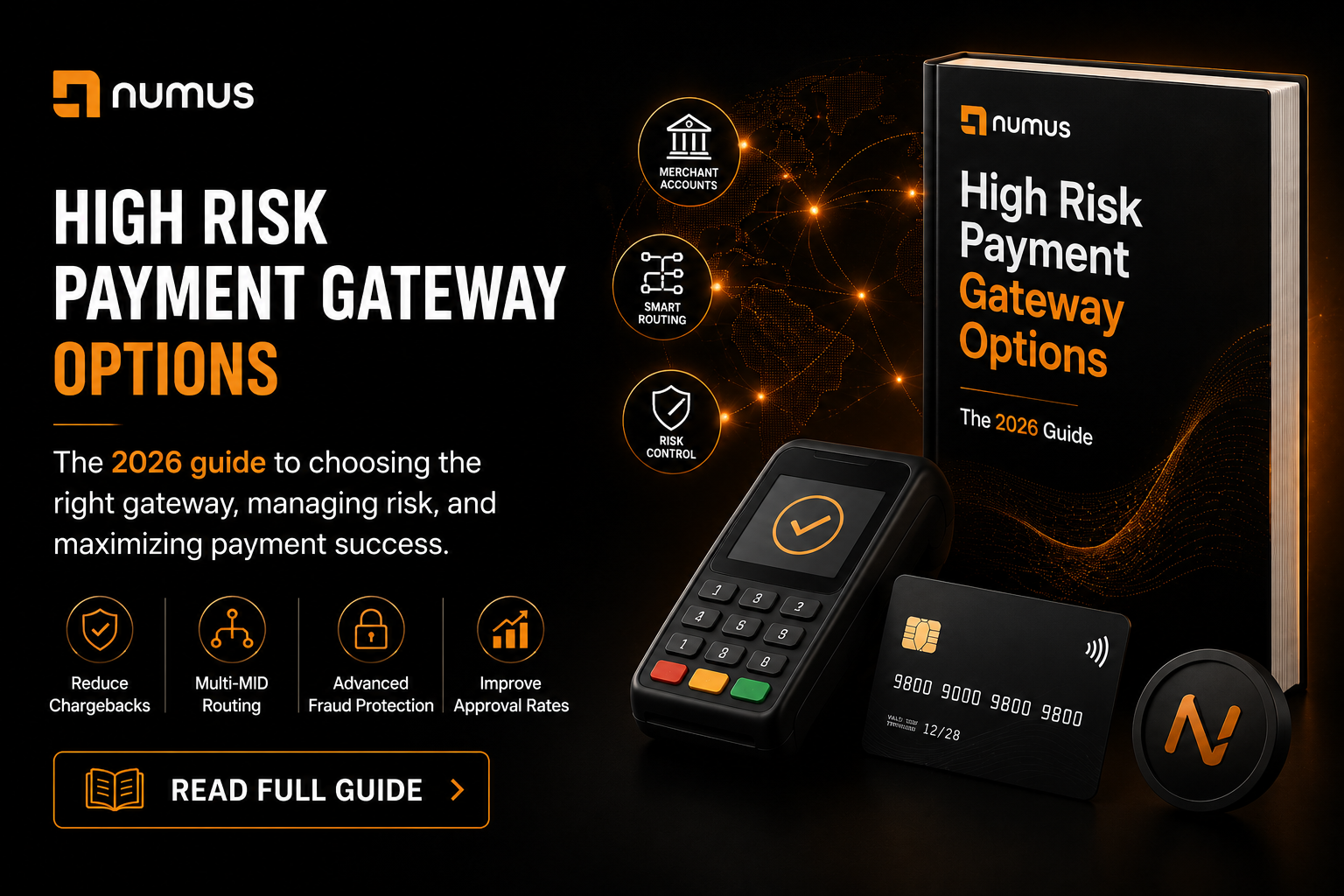
A high risk payment gateway is a specialized software interface that securely captures payment data for businesses operating in regulated or high-chargeback industries. Unlike standard gateways, high-risk gateways integrate with specialized high-risk processors, offer advanced fraud prevention tools, and support complex routing to multiple merchant accounts to ensure payment continuity.
If your business operates in a high-risk industry—such as CBD, online gaming, adult entertainment, or high-ticket coaching—you already know that securing a merchant account is difficult. However, securing the account is only half the battle. You must also connect that account to your website using a payment gateway that actually supports high-risk transactions.
Many popular payment gateways (like Stripe or PayPal) act as both the gateway and the processor, and they strictly prohibit high-risk businesses. To process payments successfully, you need a standalone, high-risk-friendly payment gateway connected to your dedicated high-risk merchant account.
Table of Contents
- What is a high risk payment gateway?
- Why Standard Gateways Fail High-Risk Merchants
- Essential Features of a High-Risk Payment Gateway
- Top High-Risk Payment Gateways in 2026
- Frequently Asked Questions (FAQ)
Why Standard Gateways Fail High-Risk Merchants
A payment gateway is simply the technology that captures the credit card data on your website and securely transmits it to your payment processor.
While the technology itself doesn’t care what you sell, the companies that own the technology do.
- Acceptable Use Policies (AUPs): Many standalone gateways (like Braintree, owned by Visa) have strict AUPs that mirror the risk tolerance of traditional banks. If they discover you are using their gateway software to process CBD or gaming transactions, they will shut off your API access, even if your underlying merchant account is perfectly fine with it.
- Lack of Advanced Fraud Tools: High-risk businesses face significantly higher rates of friendly fraud and chargebacks. Standard gateways often lack the robust, customizable fraud filters (like advanced velocity checks or 3D Secure 2.0 integration) required to protect high-risk merchants.
- No Multi-MID Support: High-risk merchants often use multiple merchant accounts (MIDs) simultaneously to distribute risk and prevent a single account closure from halting all sales. Standard gateways typically only allow connection to a single MID.
Essential Features of a High-Risk Payment Gateway
When evaluating a payment gateway for your high-risk business, you must look beyond basic connectivity. The right gateway acts as your first line of defense against fraud and account termination.
1. Multi-MID Routing and Load Balancing
This is the most critical feature for high-risk merchants. A high-risk gateway must allow you to connect multiple merchant accounts simultaneously.
- Load Balancing: The gateway automatically distributes your transaction volume across multiple MIDs to ensure no single account exceeds its monthly processing limit.
- Cascading (Failover): If a transaction is declined by one MID (or if that MID goes down), the gateway automatically routes the transaction to a backup MID in milliseconds, saving the sale.
2. Advanced Fraud Prevention Suite
High-risk merchants need more than just basic AVS (Address Verification) and CVV checks. Look for gateways that offer:
- Customizable Rules Engines: The ability to block transactions based on specific IP addresses, countries, or email domains.
- Velocity Filters: Automatically block users who attempt multiple rapid-fire transactions (a common sign of card testing).
- 3D Secure (3DS) Integration: Shifts the liability for fraudulent chargebacks from the merchant to the issuing bank by requiring the customer to authenticate the purchase with their bank (e.g., via an SMS code).
3. High-Risk Industry Acceptance
The gateway provider must explicitly state that they accept your specific industry. Do not try to hide your business model; they will eventually find out and terminate your access.
4. Seamless Integration
The gateway must integrate easily with your ecommerce platform (Shopify, WooCommerce, BigCommerce) and your CRM. Look for robust, well-documented APIs and pre-built plugins.
Top High-Risk Payment Gateways in 2026
While your high-risk payment processor (like Numus Payments) will typically recommend or provide a gateway, it is helpful to know the industry standards.
1. NMI (Network Merchants Inc.)
NMI is widely considered the gold standard for high-risk payment gateways.
- Why it’s great: NMI was built specifically with complex, high-risk merchants in mind. It offers the best multi-MID routing and load balancing in the industry (their ATIR (Advanced Transaction Routing Interface) system). It also features a highly customizable fraud prevention rules engine.
- Best for: Merchants using multiple MIDs, subscription businesses, and complex ecommerce setups.
2. Authorize.Net
Owned by Visa, Authorize.Net is one of the oldest and most reliable gateways.
- Why it’s great: It integrates with almost every ecommerce platform and shopping cart in existence. It is incredibly stable and offers a strong Advanced Fraud Detection Suite (AFDS).
- The Catch: While Authorize.Net is a gateway, they also offer bundled merchant accounts. Their bundled accounts are not high-risk friendly. You must use Authorize.Net only as a gateway, connected to a third-party high-risk merchant account.
3. eProcessing Network (ePN)
ePN is a highly versatile gateway that caters well to high-risk verticals.
- Why it’s great: ePN offers excellent support for mobile payments, recurring billing, and integrates well with QuickBooks. They are very accommodating to high-risk industries when paired with the right processor.
How to Set Up Your High-Risk Gateway
Setting up a high-risk gateway is a two-step process:
- Secure the Merchant Account First: You cannot use a gateway without a destination for the funds. Work with a specialized processor (like Numus Payments) to get your high-risk merchant account approved.
- Connect the Gateway: Once your merchant account is approved, your processor will provide you with a VAR (Value Added Reseller) sheet. This document contains the secure credentials needed to link your new merchant account to your chosen payment gateway (like NMI or Authorize.Net).
Your processor will typically handle the technical connection between the gateway and the bank. You (or your developer) will then use the gateway’s API keys to connect the gateway to your website’s checkout page.
Frequently Asked Questions (FAQ)
Can I use Shopify Payments for a high-risk business?
No. Shopify Payments is powered by Stripe, which strictly prohibits high-risk industries (like CBD or gaming). However, you can still use the Shopify platform; you just need to disable Shopify Payments and integrate a third-party high-risk gateway (like Authorize.Net or NMI) connected to your high-risk merchant account.
How much does a high-risk payment gateway cost?
Standalone gateways typically charge a monthly fee (usually $10 to $30) plus a small per-transaction fee (usually $0.05 to $0.10). This is in addition to the processing fees charged by your merchant account. Advanced features like multi-MID routing or 3D Secure may incur additional monthly costs.
What is the difference between a gateway and a virtual terminal?
A payment gateway is the software that connects your website’s checkout to the processor for customer-facing ecommerce transactions. A virtual terminal is a secure web page provided by the gateway that allows you (the merchant) to manually type in credit card details for phone or mail orders (MOTO). Most gateways include a virtual terminal for free.