

How do you get approved for a high-risk merchant account?
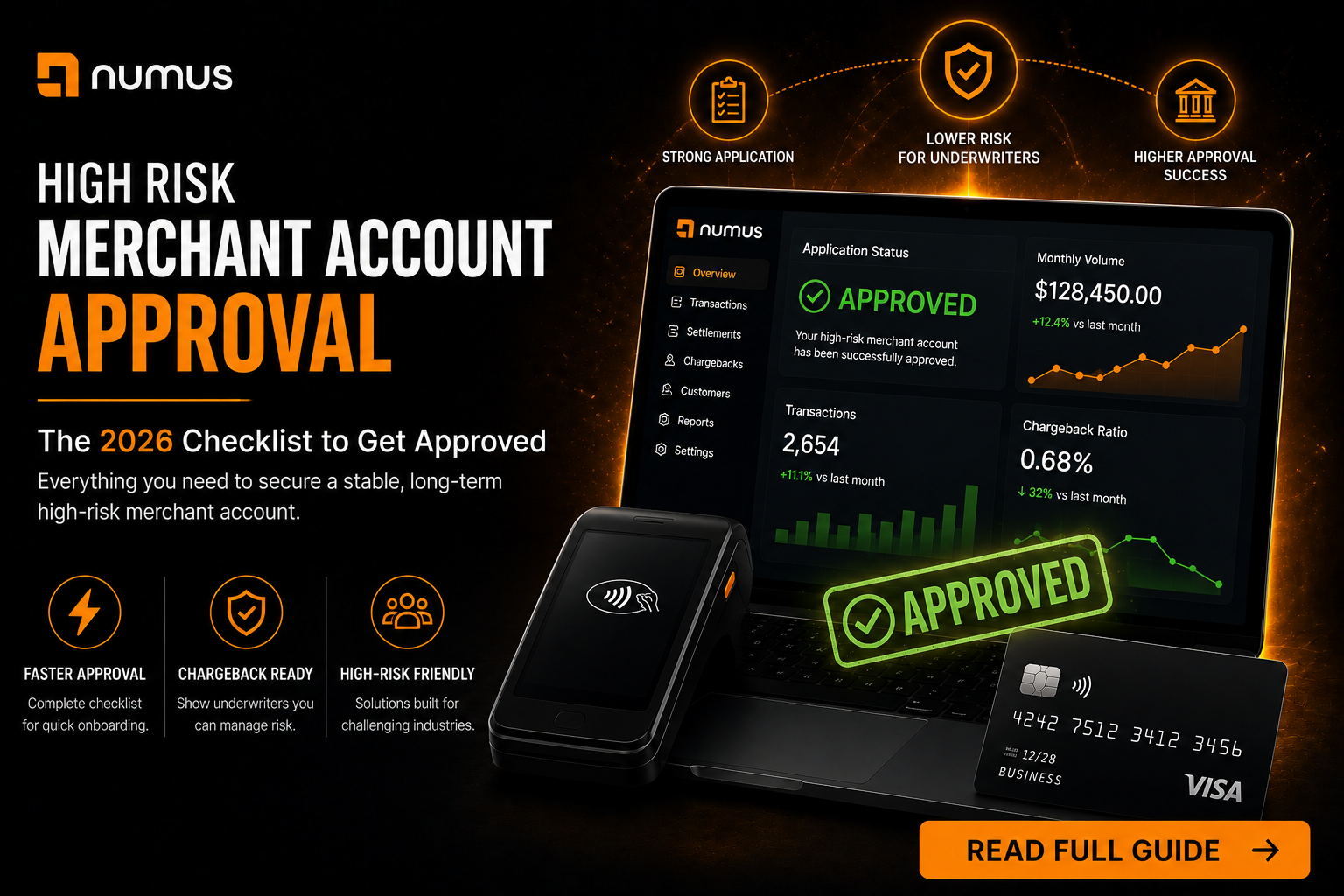
To get approved for a high-risk merchant account, you must prepare a comprehensive application package including 3-6 months of processing history, strong financial statements, and a compliant website. You must also demonstrate robust chargeback mitigation strategies and apply through a specialized high-risk payment processor rather than a traditional bank.
Securing payment processing is the biggest hurdle for businesses operating in high-risk industries. Whether you sell CBD, operate a gaming platform, offer high-ticket coaching, or run a subscription SaaS, traditional banks and aggregators like Stripe or PayPal will likely reject your application or freeze your account shortly after approval.
This guide provides the definitive checklist for navigating the rigorous underwriting process and securing a stable, long-term high-risk merchant account.
Table of Contents
- How do you get approved for a high-risk merchant account?
- Why Are You Considered High Risk?
- The High-Risk Approval Checklist
- Proving You Can Manage Chargebacks
- Why You Need a Specialized High-Risk Processor
- Frequently Asked Questions (FAQ)
Why Are You Considered High Risk?
Before applying, you must understand why underwriters view your business as a liability. Acquiring banks label businesses “high risk” for three primary reasons:
- Financial Risk (Chargebacks): Industries with historically high chargeback rates (e.g., travel, ticketing, subscription boxes) pose a direct financial threat to the acquiring bank, which is ultimately responsible if you cannot cover the reversed funds.
- Regulatory Risk: Industries operating in legal gray areas or subject to strict age restrictions (e.g., CBD, vape, adult entertainment, online gaming) require specialized compliance monitoring.
- Reputational Risk: Banks avoid industries that could damage their public image, even if the business is entirely legal.
Understanding your specific risk profile allows you to proactively address the underwriter’s concerns in your application.
The High-Risk Approval Checklist
Underwriting for a high-risk account is thorough. The underwriter’s goal is to ensure your business is legitimate, financially stable, and capable of managing chargebacks. Use this checklist to prepare your application package.
1. Corporate Documentation
- Articles of Incorporation/Organization: Proof that your business is legally registered.
- Employer Identification Number (EIN): Or the equivalent tax ID for your jurisdiction.
- Business License: Any required local, state, or federal licenses (e.g., a pharmacy license for supplements, or a gaming license).
- Utility Bill: A recent utility bill in the business’s name to verify the physical operating address.
2. Financial Verification
- Business Bank Statements: 3 to 6 months of recent, consecutive business bank statements. Underwriters look for consistent cash flow and sufficient balances to cover potential chargebacks.
- Personal Bank Statements: If your business is a startup, you may need to provide personal bank statements to prove financial stability.
- Voided Check: A voided check or bank letter for the account where your funds will be deposited.
3. Processing History (Crucial)
- Previous Processing Statements: If you have processed payments before, you must provide 3 to 6 months of consecutive processing statements.
- Chargeback Ratio: Underwriters will scrutinize these statements to calculate your chargeback ratio. If your ratio is above 1%, you must provide a detailed explanation and a mitigation plan.
- Volume and Ticket Size: Statements verify your requested monthly processing volume and average ticket size.
4. Principal Identification
- Government-Issued ID: A valid driver’s license or passport for all principal owners (typically anyone with 25% or more equity).
- Personal Credit Check: The underwriter will check the personal credit of the signers. A score above 650 is generally required, though exceptions can be made with strong financials or a co-signer.
5. Website Compliance Audit
Your website is your digital storefront, and underwriters will review it meticulously. Ensure your site includes:
- Clear Contact Info: Visible phone number, email, and physical address.
- Transparent Policies: Easily accessible Refund/Return Policy, Privacy Policy, and Terms & Conditions. (A strict “No Refunds” policy is a red flag for high-risk accounts).
- Secure Checkout: An active SSL certificate (HTTPS).
- Accurate Descriptions: Clear, non-deceptive product or service descriptions.
- No Prohibited Content: Ensure no content violates card network rules.
Proving You Can Manage Chargebacks
For high-risk businesses, chargebacks are the underwriter’s primary concern. You must demonstrate that you have systems in place to prevent and manage them.
Include a Chargeback Mitigation Plan in your application:
- Customer Service: Detail your customer service hours and response times. Fast customer service prevents disputes from escalating to chargebacks.
- Clear Billing Descriptors: Ensure the name that appears on the customer’s bank statement clearly identifies your business.
- Fraud Prevention Tools: Explain what tools you use (e.g., AVS, CVV checks, 3D Secure, or third-party fraud scoring).
- Fulfillment Timelines: Clearly state your shipping and fulfillment timelines. Delayed shipping is a major cause of chargebacks.
The Role of Reserves
If you are approved for a high-risk merchant account, you should expect the processor to implement a reserve. A reserve is a risk management tool where the processor holds a portion of your funds to cover potential future chargebacks if your business fails.
- Rolling Reserve: The most common type. The processor holds a percentage of your daily volume (e.g., 5% or 10%) for a set period (e.g., 90 or 180 days). After that period, the funds are released on a rolling basis.
- Capped Reserve: The processor holds a percentage of your volume until a specific dollar amount (the “cap”) is reached.
- Upfront Reserve: You must deposit a specific amount of cash into the reserve account before you can begin processing.
Do not view a reserve as a punishment; view it as the cost of doing business in a high-risk industry. It is the mechanism that allows the bank to approve your account [1].
Why You Need a Specialized High-Risk Processor
Applying for a high-risk account through a standard bank or a low-risk aggregator is a waste of time. You must work with a specialized high-risk payment processor (like Numus Payments).
High-risk processors have established relationships with acquiring banks that are specifically chartered to underwrite high-risk industries. They understand the nuances of your business model, know exactly how to package your application for approval, and provide the ongoing support needed to keep your account stable.
Frequently Asked Questions (FAQ)
Can I get a high-risk merchant account as a startup with no processing history?
Yes, but it is more challenging. You will need strong personal credit, solid financial reserves in your business bank account, a detailed business plan, and you will likely face a higher rolling reserve until you establish a track record.
What happens if my chargeback ratio goes over 1%?
If your chargeback ratio exceeds 1% (or 100 chargebacks per month), you risk being placed in a card network monitoring program (like Visa’s VDMP or Mastercard’s ECP). If you do not reduce the ratio quickly, your account will be terminated, and you may be placed on the MATCH list (TMF), making it nearly impossible to get another account.
How long does high-risk underwriting take?
Unlike low-risk accounts that can be approved in 24 hours, high-risk underwriting typically takes 3 to 7 business days, assuming you have provided a complete and accurate application package.