

How do you negotiate processing rates?
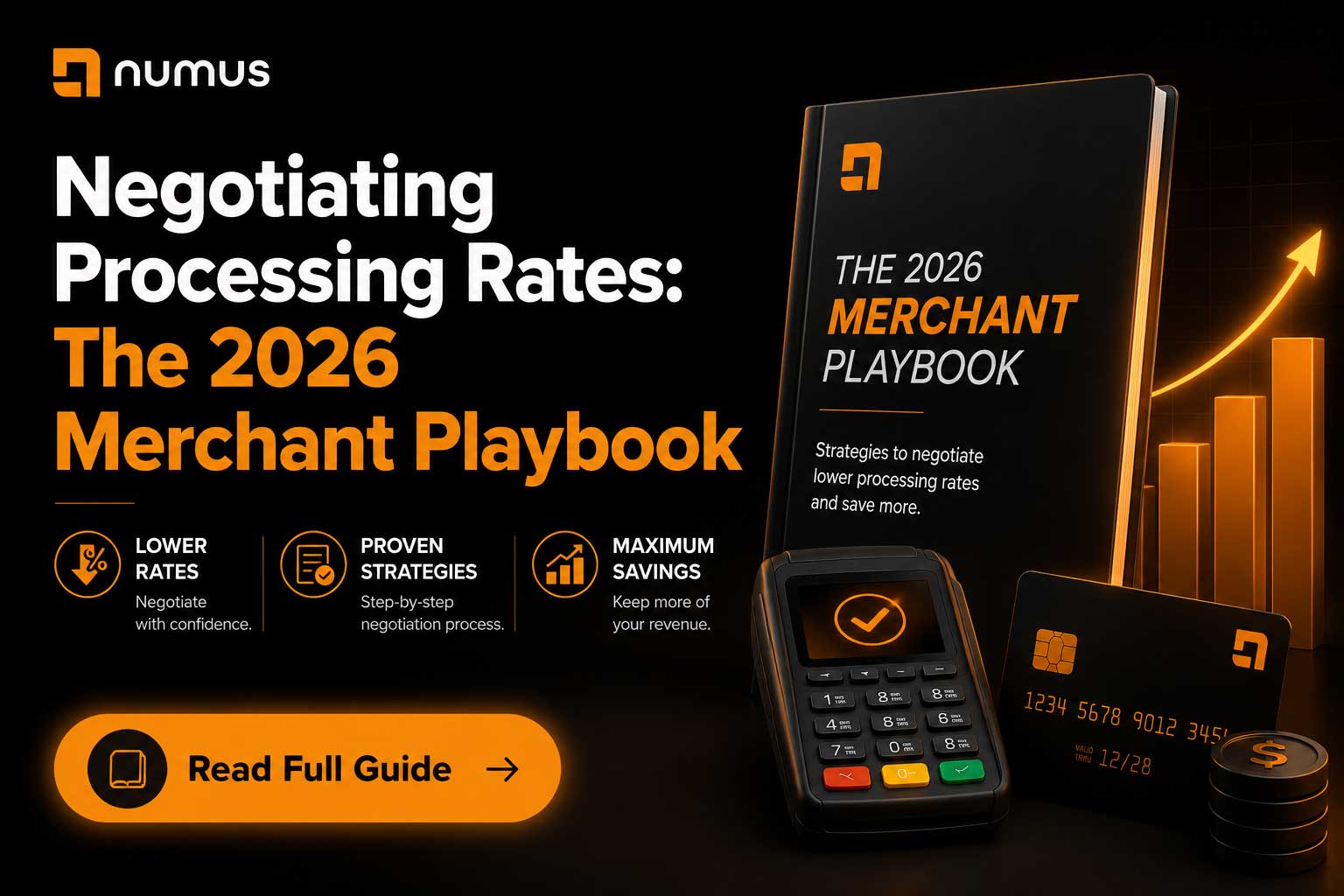
To successfully negotiate processing rates, you must (1) understand what is negotiable (processor markup, monthly fees, per-transaction fees) and what is not (interchange, assessments), (2) gather competitive quotes from multiple processors, (3) present your volume and history as leverage, (4) be prepared to walk away, and (5) time your negotiation strategically (e.g., at contract renewal or when switching processors).
Most merchants accept the first rate quote they receive from a processor. This is a massive mistake. Processing rates are highly negotiable, and a skilled negotiator can reduce their effective rate by 0.5% to 1.0%, saving thousands of dollars annually.
This guide provides a step-by-step framework for negotiating the best possible rates with payment processors.
Table of Contents
- How do you negotiate processing rates?
- What is Negotiable vs. Non-Negotiable
- Gathering Competitive Intelligence
- The Negotiation Process: Step-by-Step
- Negotiation Tactics and Best Practices
- Frequently Asked Questions (FAQ)
1. What is Negotiable vs. Non-Negotiable
Before you start negotiating, you must understand which fees you can actually negotiate.
Non-Negotiable Fees
- Interchange: Set by Visa/Mastercard. Every processor pays the same wholesale interchange. You cannot negotiate this.
- Assessment Fees: Set by the card networks. Non-negotiable.
Highly Negotiable Fees
- Processor Markup: The “plus” in “Interchange + 0.30%.” This is the processor’s profit margin and is highly negotiable.
- Monthly Gateway Fee: Often $25 to $50/month. Processors will frequently waive this for high-volume merchants.
- Per-Transaction Fees: The $0.30 (or similar) charged per transaction. This can be negotiated down to $0.10 to $0.20.
- Batch Fees: Often $0.25 to $1.00 per batch. Processors will waive this for high-volume merchants.
- PCI Compliance Fee: Often $99 to $500 annually. Processors will frequently waive this.
- Early Termination Fee (ETF): Often $300 to $1,000. This can be negotiated down or eliminated entirely.
2. Gathering Competitive Intelligence
You cannot negotiate effectively without leverage. Gather quotes from at least 3 to 5 competing processors.
How to Get Quotes
Contact multiple processors and provide them with:
- Your current monthly sales volume.
- Your average transaction amount.
- Your industry (to determine risk level).
- Your processing history (if applicable).
- Your expected growth rate.
Ask each processor for a detailed quote that includes:
- Interchange-Plus rate (or tiered rates if they do not offer Interchange-Plus).
- All monthly fees.
- All per-transaction fees.
- Chargeback fees.
- Early termination fees.
Comparing Quotes
Create a spreadsheet comparing all quotes. Calculate the effective rate for each processor at your expected volume. Do not just compare the advertised rate; compare the total cost.
3. The Negotiation Process: Step-by-Step
Once you have competitive quotes, you are ready to negotiate.
Step 1: Identify Your Leverage
What makes you an attractive merchant to a processor?
- High Volume: If you process $100,000+ per month, you have significant leverage.
- Low Risk: If you operate in a low-risk industry with low chargebacks, you are attractive.
- Clean History: If you have been processing for years without issues, you are valuable.
- Growth Potential: If you are a startup with significant growth potential, processors may offer favorable rates to win your business.
Step 2: Contact Your Current Processor (or Prospective Processor)
Call your account manager (or the sales team if you are a prospective customer). Say something like:
“I have received quotes from three other processors offering [specific rate]. I prefer to work with you, but I need you to match or beat this rate. Can you do that?”
Step 3: Negotiate the Details
If they cannot match the rate, negotiate the specific fees:
- “Can you waive the monthly gateway fee?”
- “Can you reduce the per-transaction fee from $0.30 to $0.15?”
- “Can you waive the PCI compliance fee?”
- “Can you eliminate the early termination fee?”
Step 4: Get It in Writing
Once you have agreed on a rate, get the new terms in writing before signing anything. Do not rely on verbal agreements.
Step 5: Set a Renegotiation Timeline
Rates change over time. Set a calendar reminder to renegotiate your rates annually or when your contract renews.
4. Negotiation Tactics and Best Practices
Tactic 1: The Walk-Away Threat
The most powerful negotiating tool is your willingness to walk away. If a processor will not budge on rates, actually switch to a competitor. This sends a powerful signal to the market.
Tactic 2: Timing Your Negotiation
Negotiate at strategic times:
- Contract Renewal: Processors are most flexible when your contract is about to expire.
- When Switching Processors: If you are switching, the new processor will often offer aggressive rates to win your business.
- After a Major Milestone: If you just hit a new volume milestone, use it as leverage.
Tactic 3: Bundling Services
If you need multiple services (payment processing, fraud prevention, chargeback alerts), bundle them together and negotiate a package deal.
Tactic 4: Building a Relationship
Develop a strong relationship with your account manager. When it is time to negotiate, they will be more motivated to help you because they do not want to lose your business.
5. Frequently Asked Questions (FAQ)
How much can I realistically negotiate off my processing rate?
For high-volume merchants ($100,000+/month), you can often negotiate 0.5% to 1.0% off your effective rate. For smaller merchants, the savings are typically 0.1% to 0.3%.
What if my processor refuses to negotiate?
Switch to a competitor. There are hundreds of processors out there. If one will not negotiate, another will.
Should I sign a long-term contract?
Avoid long-term contracts if possible. Try to negotiate month-to-month or annual contracts with the option to renegotiate rates annually.