

What is a white label payment gateway?
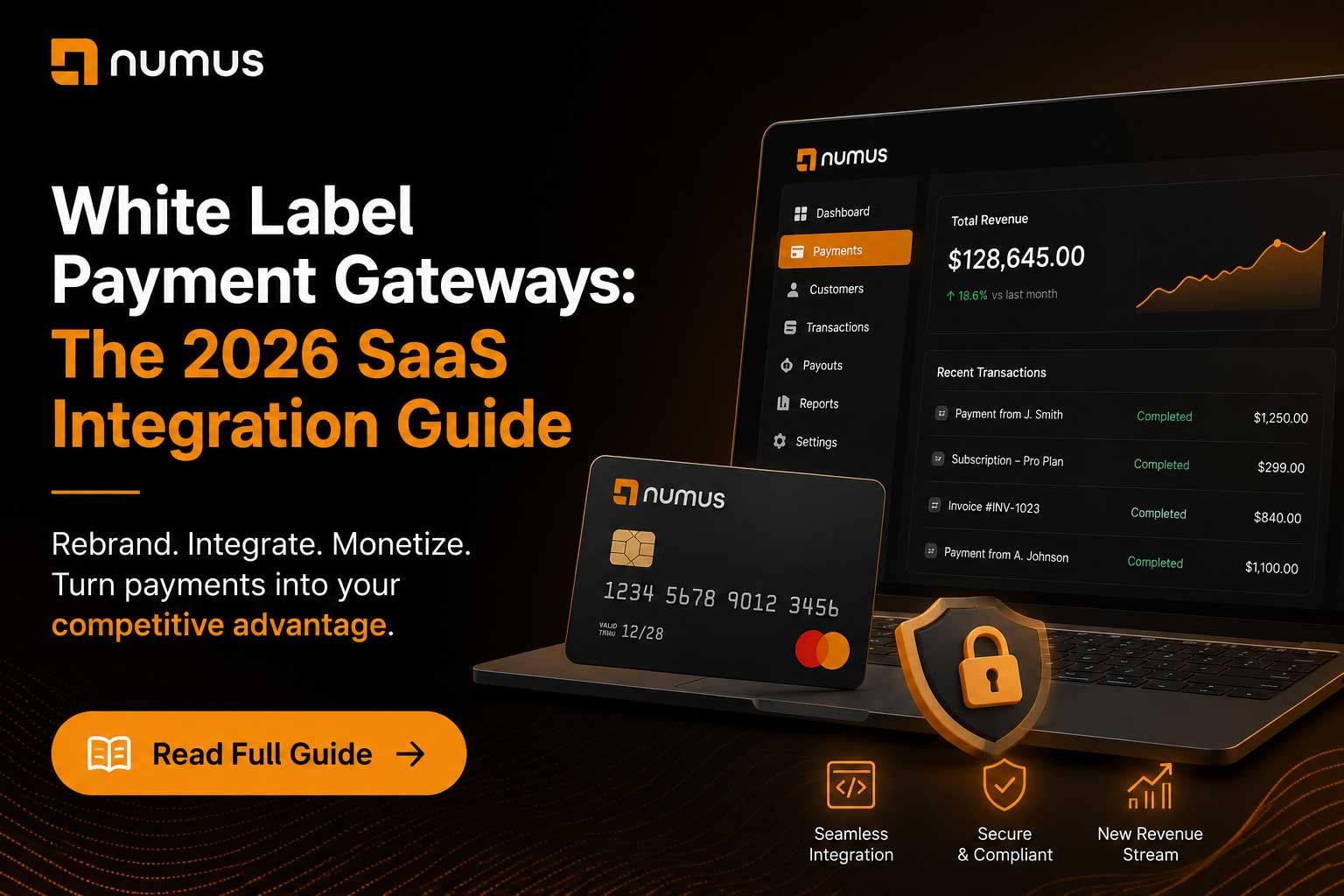
A white label payment gateway is a payment processing solution that a software company can rebrand and integrate into their platform under their own brand name. Instead of directing customers to use an external payment processor, the SaaS company embeds the gateway directly into their application, creating a seamless, branded experience. The underlying payment infrastructure (the acquiring bank relationships, the fraud filters, the settlement process) is handled by the white label provider, but the customer sees only the SaaS company’s branding.
For a vertical SaaS company (software built for a specific industry), white label payments are a game-changer. They transform payment processing from a friction point into a competitive advantage and a new revenue stream.
This guide explains how white label gateways work, the different models available, and how SaaS founders can implement them to dramatically increase customer lifetime value and retention.
Table of Contents
- What is a white label payment gateway?
- Why White Label Gateways Matter for SaaS
- The Three Models of White Label Payment Gateways
- Implementing White Label Payments: The Technical Side
- The High-Risk SaaS Dilemma
- Frequently Asked Questions (FAQ)
1. Why White Label Gateways Matter for SaaS
To understand the value of white label payments, consider the customer journey without them.
The Problem Without White Label Payments
A customer uses your gym management software. When they want to bill their members, they have to:
- Leave your software.
- Sign up for a separate merchant account (Stripe, Square, PayPal).
- Integrate that processor into your software (or manually process payments outside your platform).
- Manage two separate dashboards and customer support relationships.
This friction is a massive churn risk. If the customer’s merchant account gets frozen (as happens frequently with Stripe), they blame your software, even though it is not your fault.
The Solution: White Label Payments
With white label payments, the customer never leaves your software. They:
- Click “Enable Payments” in your dashboard.
- Verify their identity (KYC).
- Start accepting payments immediately, all within your platform.
The customer sees your branding, your support team handles first-line support, and you earn a revenue share on every transaction.
2. The Three Models of White Label Payment Gateways
There are three distinct ways to implement white label payments, each with different levels of complexity and revenue potential.
Model 1: Referral / Affiliate Model
You partner with a payment processor. When your customer needs to accept payments, you refer them to the processor. The processor pays you a commission (typically 20% to 40% of the processor’s profit margin).
- Pros: Zero technical complexity; zero liability; easy to implement.
- Cons: The customer experience is poor (they have to leave your software); you have limited control over pricing and features.
Model 2: Managed White Label (PayFac-as-a-Service)
You use a platform like Stripe Connect, Finix, or Adyen for Platforms. The provider handles the heavy lifting (regulatory compliance, acquiring bank relationships, chargeback liability), and you embed their API into your software.
- How you monetize: You set the buy rate (e.g., $2.9% + $0.30$) for your customers. The provider charges you a wholesale rate (e.g., $2.4% + $0.20$). You keep the difference.
- Pros: Excellent customer experience; you control the pricing; the provider handles most of the compliance burden.
- Cons: The provider’s strict underwriting rules apply to your customers (meaning high-risk merchants will be rejected); you have limited control over the underlying infrastructure.
Model 3: Full PayFac (Registered Payment Facilitator)
You register directly with Visa and Mastercard as a Payment Facilitator. You become the master merchant, and your customers are sub-merchants.
- How you monetize: You negotiate raw interchange rates with an acquiring bank and keep 100% of the markup.
- Pros: Maximum revenue; total control over underwriting and risk.
- Cons: Massive upfront costs ($100k+ in legal and technical setup); you hold 100% of the financial and compliance liability.
3. Implementing White Label Payments: The Technical Side
Implementing white label payments requires careful API integration and security considerations.
Step 1: Choose Your Provider
Decide between a managed PayFac-as-a-Service (easiest) or building a full PayFac (most control). For most SaaS companies, a managed PayFac is the right choice.
Step 2: Integrate the API
Your engineering team will integrate the provider’s API into your platform. This typically involves:
- Building a customer onboarding flow that collects KYC information.
- Creating a dashboard where customers can view transactions and manage payouts.
- Implementing webhook handlers to process payment events (successful charges, refunds, disputes).
Step 3: Implement Fraud Filters
You must decide what level of fraud protection to offer. Options include:
- Basic (rely on the provider’s built-in filters).
- Advanced (add your own velocity checks, device fingerprinting, or machine learning models).
Step 4: Handle Customer Support
You must decide how to handle payment-related customer support. Options include:
- Tier 1 support from your team (e.g., “How do I issue a refund?”), with escalation to the provider for technical issues.
- Full support from the provider (you just direct customers to them).
4. The High-Risk SaaS Dilemma
If your SaaS platform serves high-risk industries (e.g., a booking platform for adult entertainers, or a CRM for CBD dispensaries), you cannot use standard PayFac-as-a-Service providers like Stripe Connect. They will reject your customers.
For high-risk SaaS, the best approach is a deeply integrated ISO (Independent Sales Organization) model. You partner with a specialized high-risk processor (like Numus Payments). You integrate their gateway API into your software, but the actual merchant account underwriting is handled manually by the processor. Your customers get stable, algorithm-proof merchant accounts, and you earn a lucrative revenue share.
5. Frequently Asked Questions (FAQ)
How much revenue can I generate from white label payments?
For a vertical SaaS with 1,000 customers processing $5,000/month each, white label payments can generate $300,000 to $600,000 annually in revenue (depending on your markup and the provider’s wholesale rates).
What is the difference between white label and embedded payments?
White label payments simply mean the gateway has your logo on it. Embedded payments mean the entire financial lifecycle (onboarding, underwriting, processing, payouts) is integrated into your core product.
Can I use white label payments with Shopify or WooCommerce?
Yes. Many white label providers offer plugins for popular ecommerce platforms, allowing you to rebrand the payment experience without custom development.