

What is ecommerce payment processing?
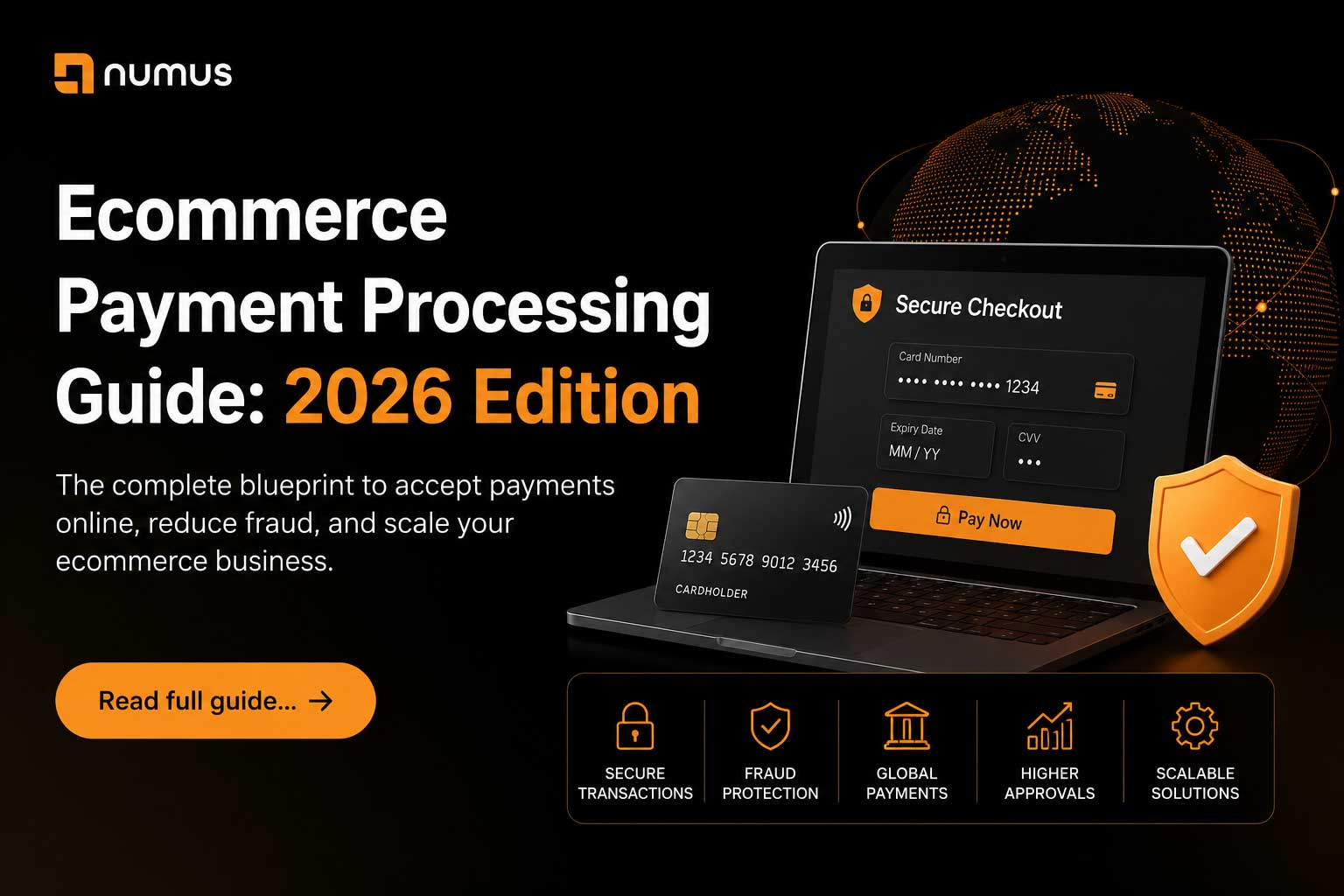
Ecommerce payment processing is the digital infrastructure that allows an online store to securely accept, verify, and settle electronic payments (credit cards, digital wallets, ACH) over the internet. It requires a payment gateway to encrypt and transmit the customer’s card data from the website, and a payment processor (merchant account) to communicate with the banking networks and transfer the funds into the merchant’s bank account.
In the physical world, a customer hands you a credit card, you swipe it through a terminal, and the transaction is complete. In the ecommerce world, the customer is invisible, the card is not present, and the transaction must travel across the open internet.
This creates massive challenges regarding security, fraud prevention, and user experience. A poorly optimized ecommerce checkout will destroy your conversion rates, while inadequate fraud filters will result in devastating chargebacks. This guide explains the mechanics of online payments, how to choose the right setup, and the specific challenges of high-risk ecommerce.
Table of Contents
- What is ecommerce payment processing?
- The Mechanics of an Online Transaction
- Choosing Your Ecommerce Payment Stack
- The Threat of Card-Not-Present (CNP) Fraud
- High-Risk Ecommerce Processing
- Frequently Asked Questions (FAQ)
The Mechanics of an Online Transaction
When a customer clicks “Submit Order” on your website, a complex, split-second process begins.
1. Encryption (The Gateway): The customer’s credit card data is encrypted by the payment gateway (e.g., Authorize.Net or Stripe Elements). This ensures hackers cannot intercept the raw card numbers.
2. Transmission (The Processor): The gateway sends the encrypted data to your payment processor.
3. Verification (The Networks): The processor routes the request through the card networks (Visa/Mastercard) to the customer’s issuing bank (e.g., Chase).
4. Authorization: The issuing bank checks if the card is valid, if the customer has sufficient funds, and if the transaction triggers any fraud alerts. The bank sends an “Approved” or “Declined” message back through the chain.
5. Settlement: If approved, the gateway tells your website to display the “Order Successful” page. Within 24 to 48 hours, the processor moves the funds from the customer’s bank to your merchant bank account.
2. Choosing Your Ecommerce Payment Stack
To accept payments online, you must choose between an all-in-one aggregator or a standalone merchant account paired with a gateway.
The Aggregator Route (Stripe, Shopify Payments, PayPal)
Aggregators bundle the gateway and the processor into one simple product.
- Pros: Instant setup; deep integrations with platforms like WooCommerce and Shopify; excellent developer tools.
- Cons: Flat-rate pricing (2.9% + $0.30) is very expensive for high-volume stores; strict underwriting means high-risk businesses will be banned instantly.
- Best For: Low-risk startups and stores processing under $20,000 per month.
The Standalone Route (Dedicated Merchant Account + Gateway)
You secure a dedicated merchant account from a processor (like NumuS Payments) and connect it to your website using a third-party gateway (like NMI or Authorize.Net).
- Pros: Access to wholesale Interchange-Plus pricing (saving thousands of dollars at scale); manual underwriting prevents sudden account freezes; essential for high-risk industries.
- Cons: Takes a few days to set up; requires two separate vendors (the processor and the gateway).
- Best For: Scaling ecommerce brands ($20k+/month) and all high-risk ecommerce businesses.
3. The Threat of Card-Not-Present (CNP) Fraud
Because the merchant cannot physically inspect the credit card or check the customer’s ID, ecommerce transactions are classified as Card-Not-Present (CNP). CNP transactions carry a significantly higher risk of fraud and chargebacks.
To protect your ecommerce store, you must implement robust fraud filters within your payment gateway:
- Address Verification System (AVS): Checks if the numeric portion of the billing address entered at checkout matches the address on file with the issuing bank. A mismatch is a strong indicator of a stolen card.
- Card Verification Value (CVV): Requires the customer to enter the 3-digit code on the back of the card. Because CVV data cannot legally be stored by merchants, possessing the CVV proves the buyer physically holds the card.
- 3D Secure (3DS): The ultimate CNP protection. 3DS (Verified by Visa / Mastercard Identity Check) requires the customer to authenticate the purchase with their bank (e.g., via a text message code or banking app notification) during checkout. Crucially, using 3DS shifts the liability for fraud chargebacks from the merchant back to the issuing bank.
4. High-Risk Ecommerce Processing
If your ecommerce store sells CBD, nutraceuticals, adult toys, vape products, or high-ticket digital courses, you are operating a high-risk ecommerce business.
Standard aggregators (Stripe, Square) will not process your payments. If you try to sneak past their automated onboarding, they will eventually catch you, freeze your funds for 180 days, and shut down your store.
High-risk ecommerce requires a specialized approach:
- High-Risk Merchant Account: You must apply for a dedicated account underwritten specifically for your industry.
- High-Risk Gateway: You should use a gateway like NMI, which allows for multi-MID routing (splitting your sales volume across multiple merchant accounts to avoid hitting volume caps).
- Chargeback Alerts: High-risk merchants must use services like Ethoca or Verifi to intercept customer disputes before they become formal chargebacks, keeping their chargeback ratio below the strict 1% threshold.
5. Frequently Asked Questions (FAQ)
Do I need an SSL certificate to process payments?
Yes. An SSL (Secure Sockets Layer) certificate encrypts the connection between your customer’s browser and your website. It is a mandatory requirement for PCI compliance.
Without an SSL (your URL must start with HTTPS), payment gateways will refuse to process your transactions.
What is PCI Compliance for ecommerce?
The Payment Card Industry Data Security Standard (PCI DSS) is a set of rules designed to ensure all companies that accept card payments maintain a secure environment. For most ecommerce stores using modern gateways (where the card data is typed into an iFrame hosted by the gateway), the PCI burden is minimal (SAQ A), requiring only a basic self-assessment questionnaire.
Can I accept international payments on my ecommerce store?
Yes, but it requires optimization. If you use a US-based merchant account to process a European credit card, you will pay high cross-border fees, and the transaction is more likely to be declined by the foreign bank. Enterprise ecommerce stores use payment orchestration to route international transactions to local acquiring banks.